
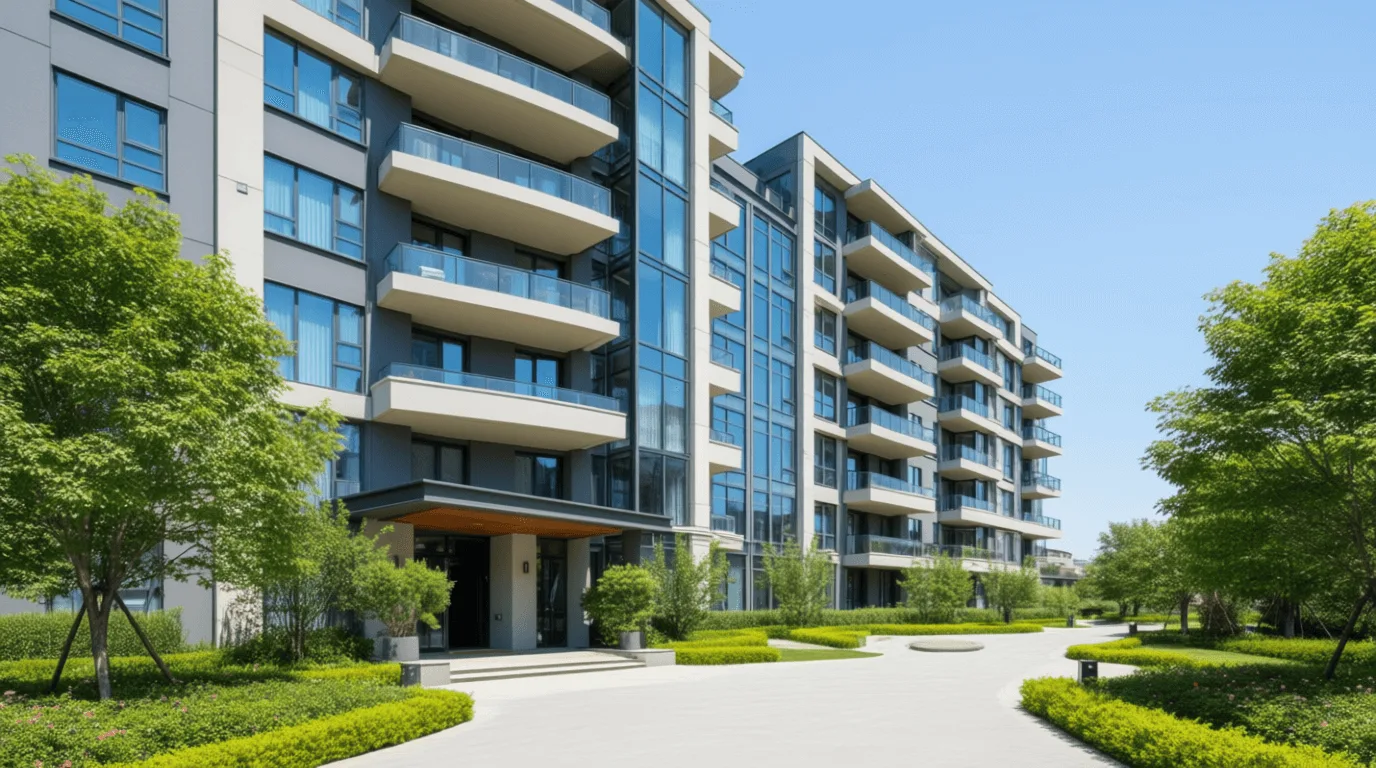
Have you ever wondered how the management of a condominium works? In Brazil, about 40% of the population lives in condominiums. Understanding the dynamics of a condominium is essential for anyone who lives or intends to live in one.
The condominium system arose from the need to organize community life. Whether residential or commercial, the condominium establishes rules to ensure everyone's well-being, prevent conflicts, and promote harmonious coexistence.
Knowing your rights and duties in a condominium ensures a smoother experience. The goal of this article is to provide clear and objective information about condominium living, empowering you to make informed decisions.
What are the types of condominiums?
Understanding the different types of condominiums is crucial for grasping their specificities and ensuring efficient management. This section explores the main types, from residential to industrial, highlighting their characteristics, use cases, and advantages. The aim is to provide a comprehensive overview to aid decision-making.
Residential Condominium
Residential condominiums are the most common type, intended for housing. They are characterized by shared common areas such as party rooms, swimming pools, and gardens, used by all residents. Management focuses on well-being, safety, and property preservation. Decisions are made in assemblies, where residents vote on collective matters like renovations and setting the condominium fee. A practical example is an apartment building with 24-hour security and recreational areas.
- Focused on housing
- Shared common areas
- Management focused on well-being and safety
Commercial Condominium
Designed for commercial activities, commercial condominiums house offices, shops, and consulting rooms. Their management is tailored to the specific needs of businesses, such as differentiated operating hours, enhanced security, and maintenance of specialized equipment. The condominium fee is usually higher due to operational costs. An example is a business center with various companies and services, where the administration ensures smooth operation for all occupants.
- Focused on commercial activities
- Specific business needs
- Management focused on security and equipment maintenance

Mixed-Use Condominium
Mixed-use condominiums combine residential and commercial units in the same space. Their management is more complex, as it needs to cater to the distinct needs of residents and businesses. It is crucial to establish clear rules for the use of common areas and the division of expenses. An example is a development with apartments on the upper floors and shops on the ground floor, requiring an administration that balances the interests of both groups.
- Combines residential and commercial units
- Complex management
- Need for clear rules
Industrial Condominium
Intended for industrial activities, industrial condominiums offer suitable infrastructure for companies in this sector, such as warehouses, security systems, and loading/unloading areas. Management focuses on aspects like access control, property security, and waste treatment. An example is an industrial park with various factories and distribution centers, where the administration ensures proper operation for industrial activities.
- Focused on industrial activities
- Adequate infrastructure for companies
- Management focused on security and waste treatment
Building Condominium
A building condominium consists of structures divided into autonomous units (apartments, offices, shops) and common areas. Ownership is shared among the residents, each with their ideal fraction. Administration is handled by an elected manager (síndico) and a fiscal council. Rules are defined in the condominium convention and internal regulations. An example is an apartment building where each resident owns their unit.
- Buildings divided into autonomous units
- Ownership shared among residents
- Administration by manager and fiscal council
Condominium: Discover the Benefits of Living in One
Condominium living offers a range of advantages beyond just housing. From enhanced security to shared recreational areas, condominiums provide a more practical and comfortable lifestyle. Explore the main benefits of choosing this type of residence.
Enhanced Security for Your Family
Security is a priority in condominiums, offering peace of mind to residents. With 24-hour reception and surveillance systems, access control is strict, minimizing risks and providing a safer environment for everyone.
- 24-hour reception with access control
- Camera surveillance systems
- Electric fences and perimeter alarms
- Security procedures for visitors and service providers
Leisure Areas for All Ages
Condominiums offer various leisure options without leaving home, optimizing time and promoting social interaction. With spaces like swimming pools, party rooms, and gyms, there are activities for all ages and interests.
- Adult and children's swimming pools
- Equipped party room
- Gourmet space with barbecue
- Children's playground
- Gyms and fitness areas
Shared Costs and Savings
Sharing costs among residents makes condominium living more economical. Expenses for maintenance, gardening, and security are divided, reducing individual impact and facilitating financial planning.
- Maintenance of common areas shared among residents
- Services like gardening and cleaning included in the condominium fee
- Possibility of splitting extra expenses
- Collective building insurance
Convenience and Services at Your Disposal
Convenience is a major draw of condominium living. Services like reception, maintenance, and garbage collection simplify daily life, freeing residents from bureaucratic tasks and ensuring more free time.
- Reception and janitorial services
- Garbage and recycling collection
- Building maintenance
- Minor repairs
- Professional condominium management
How to Optimize Condominium Financial Management?
Condominium financial management requires organization and planning. The following steps detail how to optimize this management, ensuring the condominium's financial health and resident satisfaction. Follow the order for best results.
Organizing Condominium Finances
Develop a Detailed Budget
Start by listing all fixed and variable expenses of the condominium. Include costs for maintenance, salaries, utility bills, and insurance. A realistic budget forecast is crucial to avoid financial surprises throughout the year.
Implement an Efficient Collection System
Adopt an online collection system to facilitate condominium fee payments. Offer various payment options, such as bank slips and credit cards. Send payment reminders to reduce delinquency.
Create a Reserve Fund
Establish a reserve fund to cover emergency and unforeseen expenses. Define a percentage of the condominium fee to be allocated to this fund. The reserve fund ensures the condominium's financial health in unexpected situations.
Conduct Periodic Audits
Hire an external audit to review the condominium's accounts. Audits ensure transparency in financial management and identify potential irregularities. Present the audit results to residents in an assembly.
Negotiate Contracts with Suppliers
Research and compare prices before hiring service providers. Negotiate contract terms to obtain the best conditions. Efficient contract management can generate significant savings for the condominium.
Understand the Essential Differences in Condominiums
This table aims to compare different types of condominiums, highlighting their focus, management structures, and common costs. Understanding these differences is crucial for effective administration and meeting the specific needs of each condominium type.
| Condominium Type | Main Focus | Management Structure | Common Costs | |
|---|---|---|---|---|
| Residential Condominium | Residential | Residents' housing and well-being | Manager elected by residents, regular assemblies | Maintenance of common areas, security, gardening, cleaning |
| Commercial Condominium | Commercial | Commercial operations and businesses | Professional administration, specific rules for companies | Building maintenance, security, cleaning, space marketing |
| Mixed-Use Condominium | Mixed (Residential and Commercial) | Balance between housing and commercial activities | Manager and council with representatives from both segments | Cost sharing based on usage and occupied areas |
| Corporate Condominium | Corporate Building | Corporate image and operational efficiency | Professional management specialized in large companies | Technology, advanced security, high-standard maintenance |
Frequently Asked Questions About Condominiums?
Understanding condominium rules and practices is essential for harmonious coexistence and property appreciation. To assist you on this journey, we've compiled the most frequently asked questions, answered clearly and concisely.
Is the condominium convention really important?
Yes, the convention is an essential document. It establishes the basic rules of coexistence and administration, defining the rights and duties of residents. Ignoring the convention can lead to conflicts and legal actions, making community life more difficult.
What is included in the condominium fee?
The condominium fee covers expenses such as maintenance of common areas, employee salaries, utility bills for common areas, insurance, and the reserve fund. It is crucial for the smooth operation of the condominium and for property appreciation.
Does the manager really make a difference in the condominium?
Yes, the manager plays a fundamental role. They are the legal representative of the condominium, responsible for managing finances, ensuring compliance with regulations, and guaranteeing the safety and well-being of residents. Their performance directly impacts the quality of life.
What are the risks of delinquency in a condominium?
Delinquency can cause serious financial problems for the condominium, compromising essential maintenance and services. Furthermore, residents who are up-to-date with their obligations end up bearing a greater burden to cover the deficit, leading to dissatisfaction.
Is security really important in condominiums?
Yes, security is a priority. Invest in surveillance systems, access control, adequate lighting, and staff training. Resident awareness of preventive measures is also crucial to ensure everyone's safety.
How do I reserve common areas in the condominium?
Reserving common areas must follow the rules established in the internal regulations. Generally, you need to check availability, fill out a form, and pay a fee, if applicable. Respecting the rules ensures fair and organized use of the spaces.
Is communication important in condominiums?
Yes, transparent communication is vital. Use channels such as notice boards, emails, apps, and assemblies to inform residents about decisions, works, events, and other relevant matters. Efficient communication prevents misunderstandings and builds trust.
Is professional management always the best option for condominiums?
Professional management can bring several benefits, such as better financial organization, process optimization, cost reduction, and improved service quality. However, it is important to research and choose a company with experience and credibility.
Elevating Condominium Management to New Heights
Managing a condominium is orchestrating lives, assets, and dreams. Just as a conductor leads a symphony, the manager coordinates this complex structure. Remember the case of the Colina Verde condominium, which, by implementing transparent management, saw resident satisfaction jump 40% and property values increase significantly. Be inspired!
Why not start today? Implement more open communication, create an active advisory council, and invest in technology to optimize processes. Small actions lead to big transformations. Remember: a well-managed condominium is not just a place to live, but a home to thrive. The future of your condominium starts now!